



User experience design is at a critical juncture
The past several years have been a roller coaster for UX. From AI disruption and the post-COVID hiring boom to shrinking venture capital investment and an unpredictable economy, volatility has become our new normal.
For those of us who’ve been on the front lines of the tech industry’s boom-and-bust cycle since the 1990s, the formula for riding out periods of uncertainty remains the same: Adapt faster. Deliver next-generation experiences that will provide long-term gains, meet the higher expectations that go with more competitive landscapes, and think strategically for the year (and decade) ahead.
AI still dominates the discourse, but in many ways UX is returning to foundational values and re-centering the human experience. There’s considerable pressure on design leaders to turn emerging technologies into business assets, quickly. But we’ll tackle these challenges more effectively if we stay true to the principle that a better user experience always adds value.
Below are four shifts smart UX leaders are tracking right now.
1. UX measurement is getting a reboot.
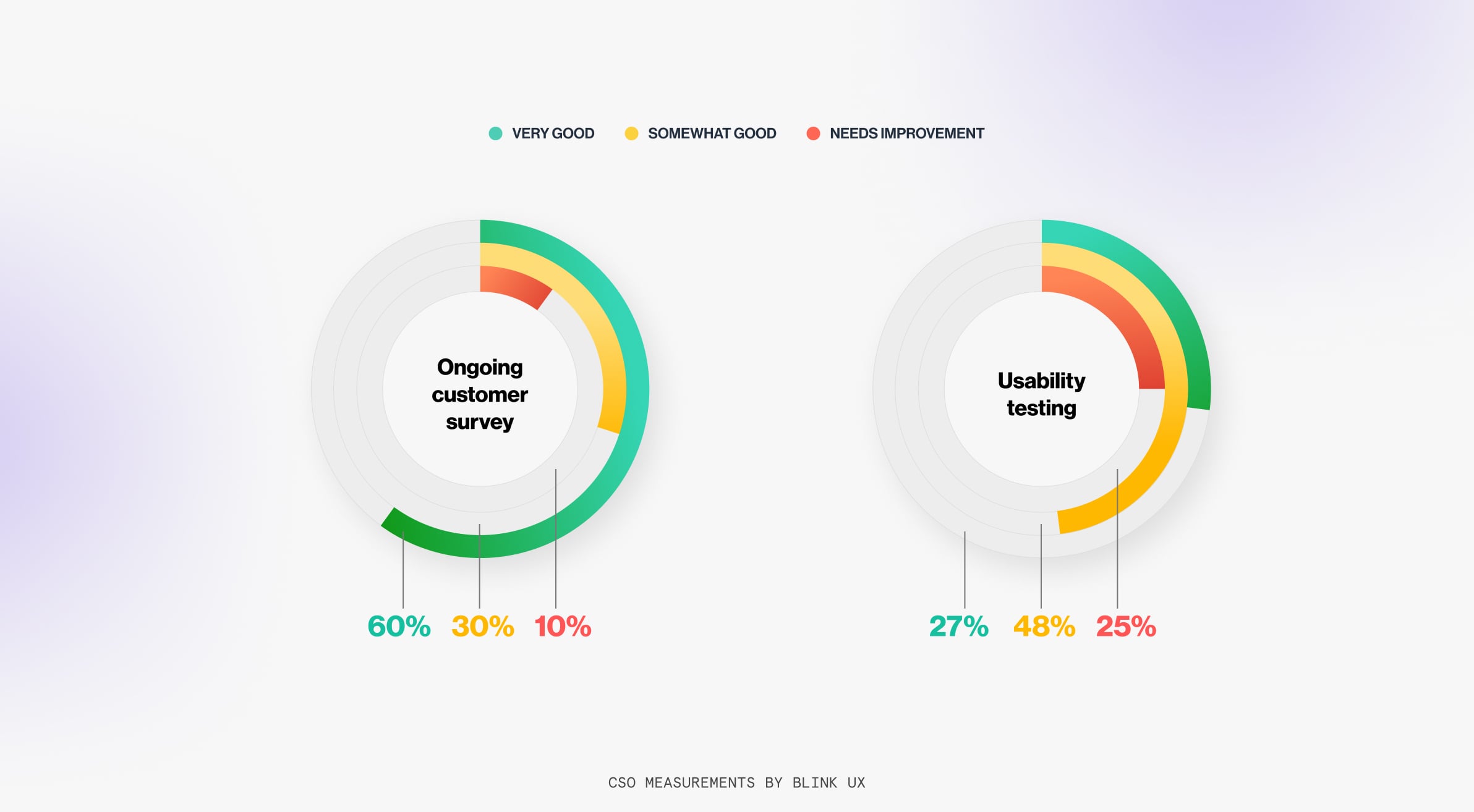
At Forrester, Rich Saunders noted how “the misguided pursuit of metrics” warps customer experience programs and actually impedes our ability to gauge success or failure. In the words of our Chief Research Officer Tom Satwicz, “The best UX metrics drive real product improvements—not just sentiment scores, but insights that lead to action.” Survey metrics can be misleading and often aren’t actionable. What we need to measure is how customer needs are being met in the various journeys that they experience with the product.
The advent of more dynamic experiences with AI-enabled interfaces offers an opportunity to rethink how we measure user experiences. Smart organizations are shifting emphasis from relationship metrics like CSAT to journey-level metrics like Customer Success Outcomes. To execute this kind of measurement effectively, future-ready teams are already investing in new evaluative methods for observing and understanding user behavior.
2. Employee experience (EX) improvements are driving the customer experience (CX) gains.
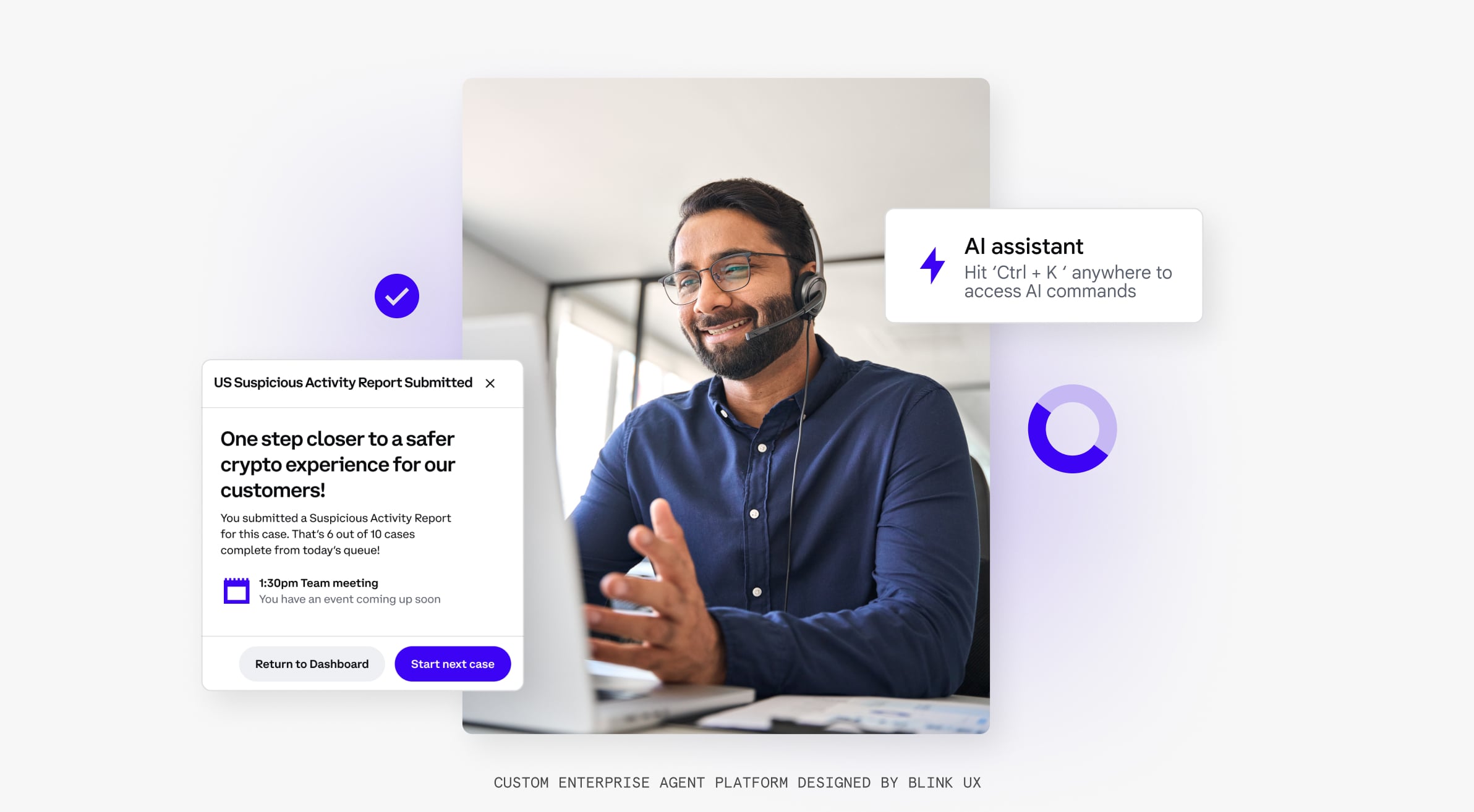
Companies with mature UX practices understand that the employee experience and the backstage enable the customer experience and front stage. Effective modern CX requires investing in your backend, particularly if you want to to create outstanding AI interactions for customers—yet most companies’ data, systems, or processes are nowhere near ready.
New AI-first companies are showing us what is possible, but legacy companies that have market share, customer trust, and the infrastructure to scale their operations can’t just slap an AI face on an old, un-AI backend. Backend systems cannot scale or achieve reliability without strong data modernization efforts and improved efficiency; they need extensive design and strategy to bring them up to modern standards and prevent cascading failures.
There’s enormous room for growth in applying product strategy and design to the employee experience and the backstage, and many instances where UX practitioners can help with interaction and semantic layers.
Bridging the chasm between CX and EX is swiftly becoming a new core differentiator, but doing so effectively demands a service design lens. Given the complexity of many enterprises, product teams are going to have to do this work incrementally while building toward a more AI-enabled future. By using a service design approach, teams will find where they can improve efficiency, provide better experiences, and discover new revenue streams.
3. Augmented reality (AR) is finally delivering products with marketable use cases.
Until recently, AR successes have been on par with the success of car phones in the late 1980s and early 1990s. Those bulky, corded bricks were exciting new technology at the time—but they were also unwieldy and cost-prohibitive, with serious use limitations that prevented widespread adoption.
The current environment looks a lot like the early-2000s era for mobile phones—still early in the game, but AR products are finally giving us real use cases. I’m seeing increasingly powerful technology that’s adopted and relied upon more often in business and productivity contexts. Some examples:
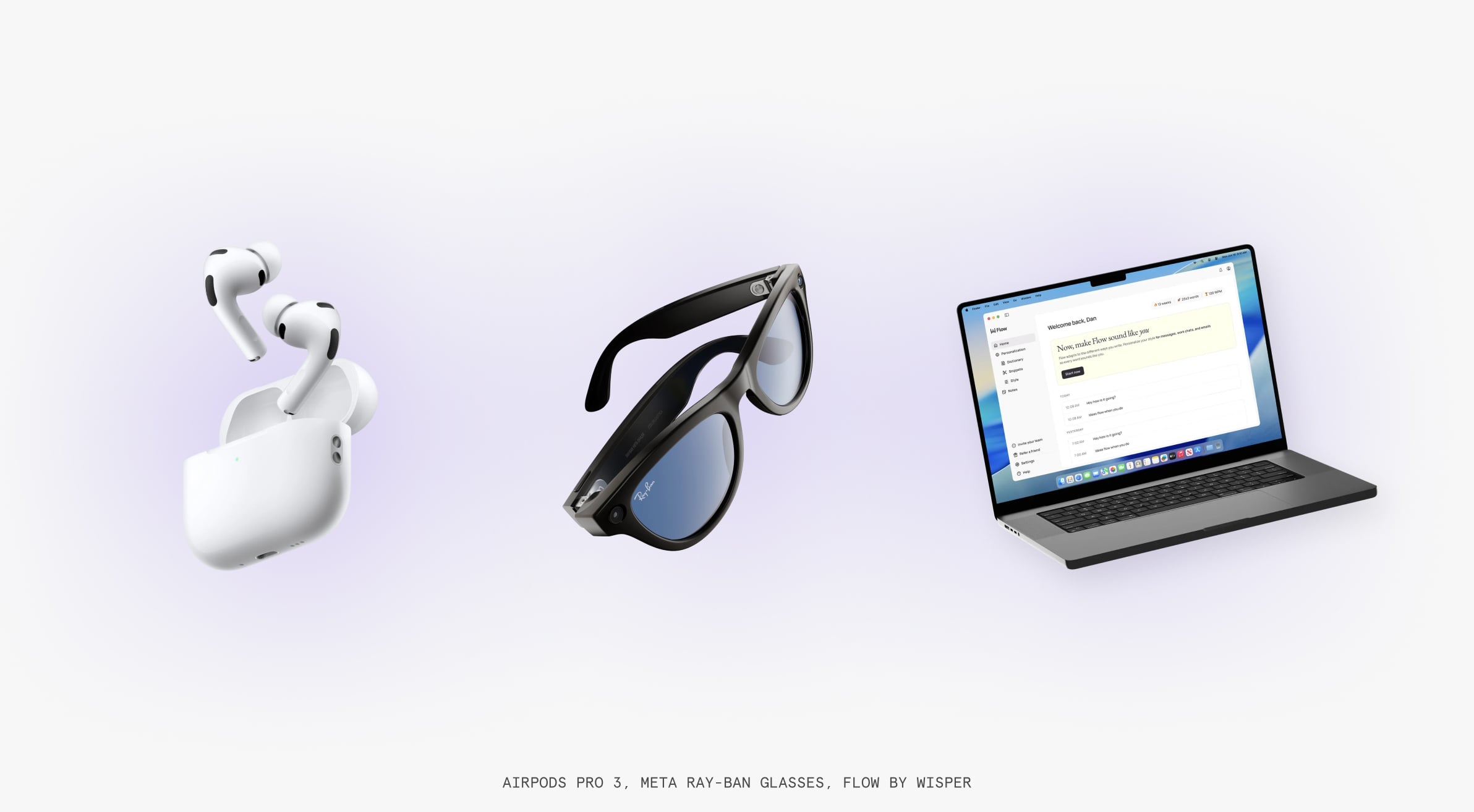
Apple’s AirPods Pro 3 translation feature. Digital language translators aren’t new, but Apple’s execution offers surprisingly accurate, real-time translation directly into the user’s ears. The New York Times called it “one of the strongest examples yet of how artificial intelligence can be used in a seamless, practical way to improve people’s lives.”
Smart glasses for next-level logistics. Still in testing, Amazon’s “Amelia” glasses include a camera and built-in display, and pair with a button that drivers can press to photograph deliveries. The final mile of product delivery is the most time-consuming and costly stage of the supply chain, accounts for more than 50% of total shipping costs. If this eyewear can transform the complicated “last mile problem,” that’s a major breakthrough.
New applications that enable voice control of your PC. AI-enabled voice tools like Wispr deliver a much richer experience than simple speech-to-text, because they can infer intent and adapt to a user’s patterns. They can also start to stitch together data from multiple places in your workflow. Think of these tools as new prompt interfaces on top of your PC or Mac that you can access anytime.
What do these AR innovations mean for UX? There will be winners and losers in the race to differentiated experiences, but in 2026, UX designers need to start thinking beyond the screen and outside the bounds of the familiar inputs and outputs that have defined our product spaces for so long.
4. Brand and content still win.
Increasingly, I’m seeing companies returning to story and coming back to human connection.
In some ways, the AI frenzy has driven organizations to focus all their resources on keeping pace with their competitors, with brand taking a backseat to AI features—but in doing so, they’ve lost sight of customer needs. Effective design now needs to move beyond features to create emotional impact. I’m already seeing content, tone, images, and dialogue design converge to produce interfaces that are more intentionally designed.
Users won’t tolerate less. You only need to look at the massive backlash against Duolingo’s AI-first debacle to see that subtracting the human element from your customer experience can backfire spectacularly. Klarna also had to reverse course on its AI-first initiative and re-hire nearly 700 workers in response to customer outrage; FinTech Weekly observed the company’s over-automation fiasco proved there’s a “competitive advantage” in “restoring human presence to the customer journey.”
UX design and information design still provide enduring value. Not every product interaction will—or should—be handled through a chat window or conversational agent. And even chat interfaces provide excellent opportunities for more thoughtful UX.
This year we’re seeing a course correction that recenters the human factor of both designers and users. Companies that can figure out human-AI collaborations that earn user trust and empower people rather than discounting or replacing them will be the ones that succeed.
If we can think proactively, even in this volatile environment, we’ll have a far better chance of anticipating and responding to abrupt changes, without getting trapped in reaction mode or blowing up hard-won consumer trust with poorly thought-out solutions. I’m placing my bets on measuring what matters most, leaning into the human element of user experience design, and creating systems that incorporate empathy and nuance to deliver better customer experiences.
Geoff Harrison is Blink's Chief Experience Officer. A hands-on practitioner with decades of senior UX leadership experience, Geoff previously headed the Blink design team as Chief Design Officer, where he helped build a full-service product design consulting practice by uniting the firm’s research expertise with strategy, design, and development. Geoff writes, speaks, and keynotes at industry conferences about his insights into creating customer-led organizations and the future of user experience design.