



Design thinking was one of business’s biggest buzzwords for decades.
Touted as a tool for democratizing the value of ideation and concepting while also honing a key competitive edge, consulting firm IDEO popularized design thinking as business strategy to the mainstream. Corporate America, awestruck by Apple and its design-obsessed leader Steve Jobs, eagerly signed on to the design thinking framework. Design thinking workshops and courses sprang up everywhere, promising that everyone could “think like a designer.” Stanford’s d.school offers regular Design Thinking Bootcamps, promising participants “a design thinking toolkit to lead innovation efforts in your organization.”
Today, effusing about the magic of design thinking sounds dated at best, woefully out of touch at worst. Fast Company dubbed it “one of the most divisive topics in the field;” declaring design thinking dead has become a popular pastime.
What happened?
The promise of design thinking
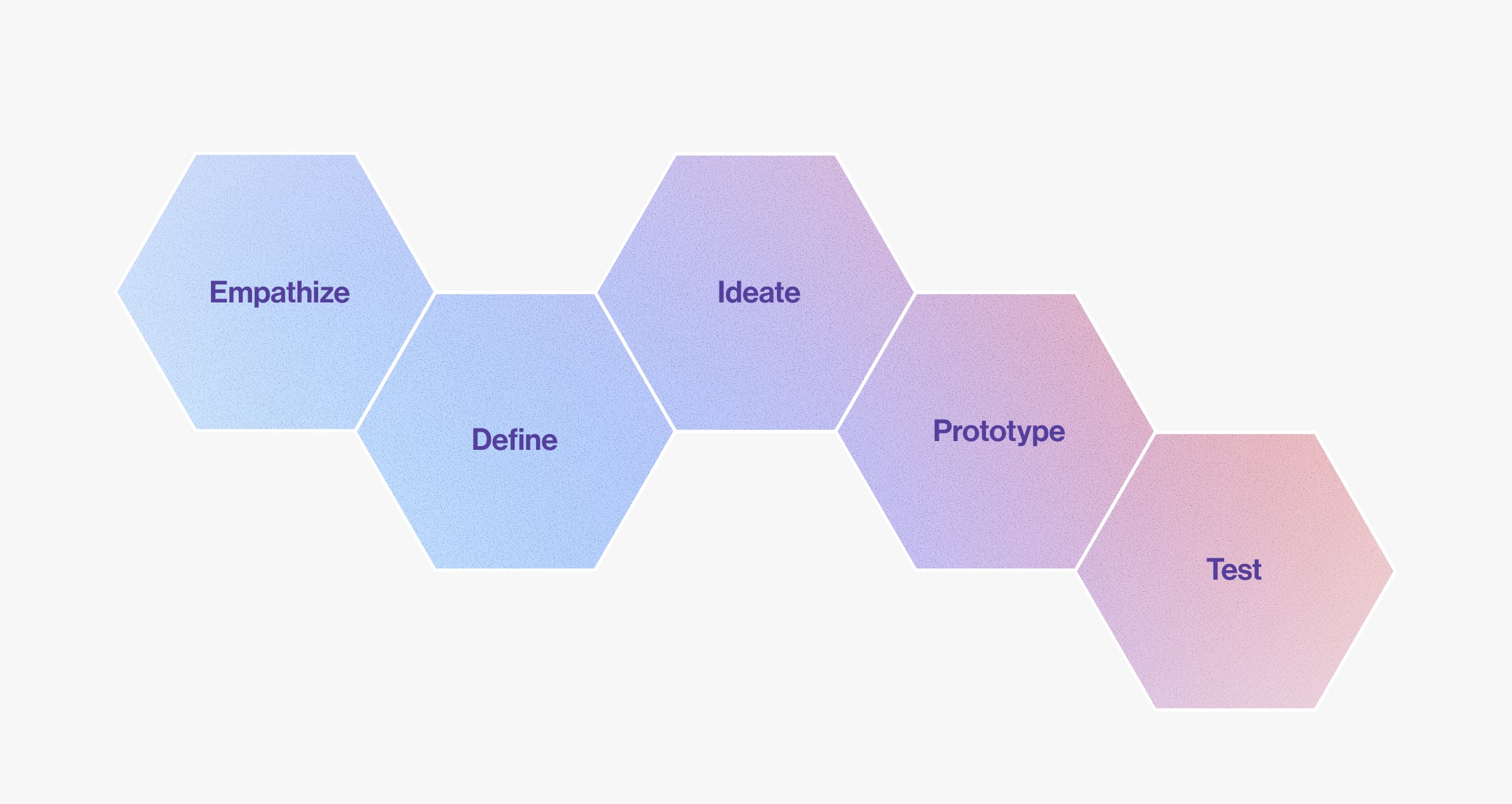
By the early 2000s, blue-chip companies like General Electric, IBM, and Procter & Gamble were adopting design thinking methodology in hopes of driving innovation, better customer experiences and Silicon Valley-level profits. The Harvard Business Review announced that the design thinking framework was fully “infusing corporate culture.” A utopian narrative emerged that the five simple steps of design thinking—empathize, define, ideate, prototype, and test—were a panacea for all business problems, and that applying them would launch your next product to iPhone-levels of success.
More than a decade later, design thinking, as terminology for what user experience designers and strategists do every day, has more detractors than defenders. I’d argue the problem with the term is that many enterprise organizations attempted to apply it in situations that were simply incompatible with its scope and depth. UX-mature organizations have a more sophisticated understanding of successful UX design practices, which demand systemic approaches, specialized expertise, and unwavering focus on delivering durable solutions that last.
The design thinking framework has been replaced with a longer-term methodology, one that emphasizes ideation based on deep research, subject-matter expertise and planning before execution. We’re not simply brainstorming ideas—we’re designing outcomes.
Design thinking was never intended to do it all
Design thinking did shape modern innovation practices and helped large organizations focus on the user experience. But its proponents often focused on developing ideas into prototypes—without considering whether there was a market for the end result.
- Dilution and misuse. Corporations used design thinking as a check-the-box workshop instead of a mindset. “People were like, ‘We did the process, why doesn’t our business transform?'” said UX designer Cliff Kuang. But transformation is tough. There’s no magic shortcut to achieve it, and there’s no foolproof process that automatically leads to results.
- Shallow application. Too many teams over-indexed on Sharpies, sticky notes, and workshops without systemic organizational change or tangible follow-through.
- Mismatch with complexity. Design thinking methodology struggles with big, messy, systemic challenges like full organizational adoption, AI ethics, sustainability, or inequity.
- Neglecting market feasibility assessment. Too often, developers didn’t ask whether the solution they were building was actually wanted and needed by users. “Design matters,” wrote Suzanne LaBarre. “But it can’t invent customers who don’t exist.” (Her case in point: the universally mocked Juicero, which raised $120 million to produce a “smart juicer” that no one asked for and collapsed less than 18 months after its first product launch.)
- Empathy is not a substitute for expertise. The “beginner’s mind” approach so beloved by IDEO too often translated to ignorance of real-world scalability, built products, and adoption.
- A dearth of tangible results. Finally and perhaps most damningly, design thinking frequently fell short with implementation and outcomes. Critics scoffed at what they called the “innovation theater” of design thinking. What problems did it really solve? What products did it build and ship? Even its champions admitted that ”the success rate for design thinking processes was very low.”
In 2025, you can gauge the UX maturity of an organization by their use and understanding of the design thinking methodology. So what’s taken design thinking’s place?
What A Mature UX Design Practice Looks Like
In 2025, organizations that lead with design thinking methodology are generally viewed as low-UX maturity. Successful UX design practitioners have shifted toward deeper and more meaningful practices: design ops, systems thinking, service design, and experience strategy.
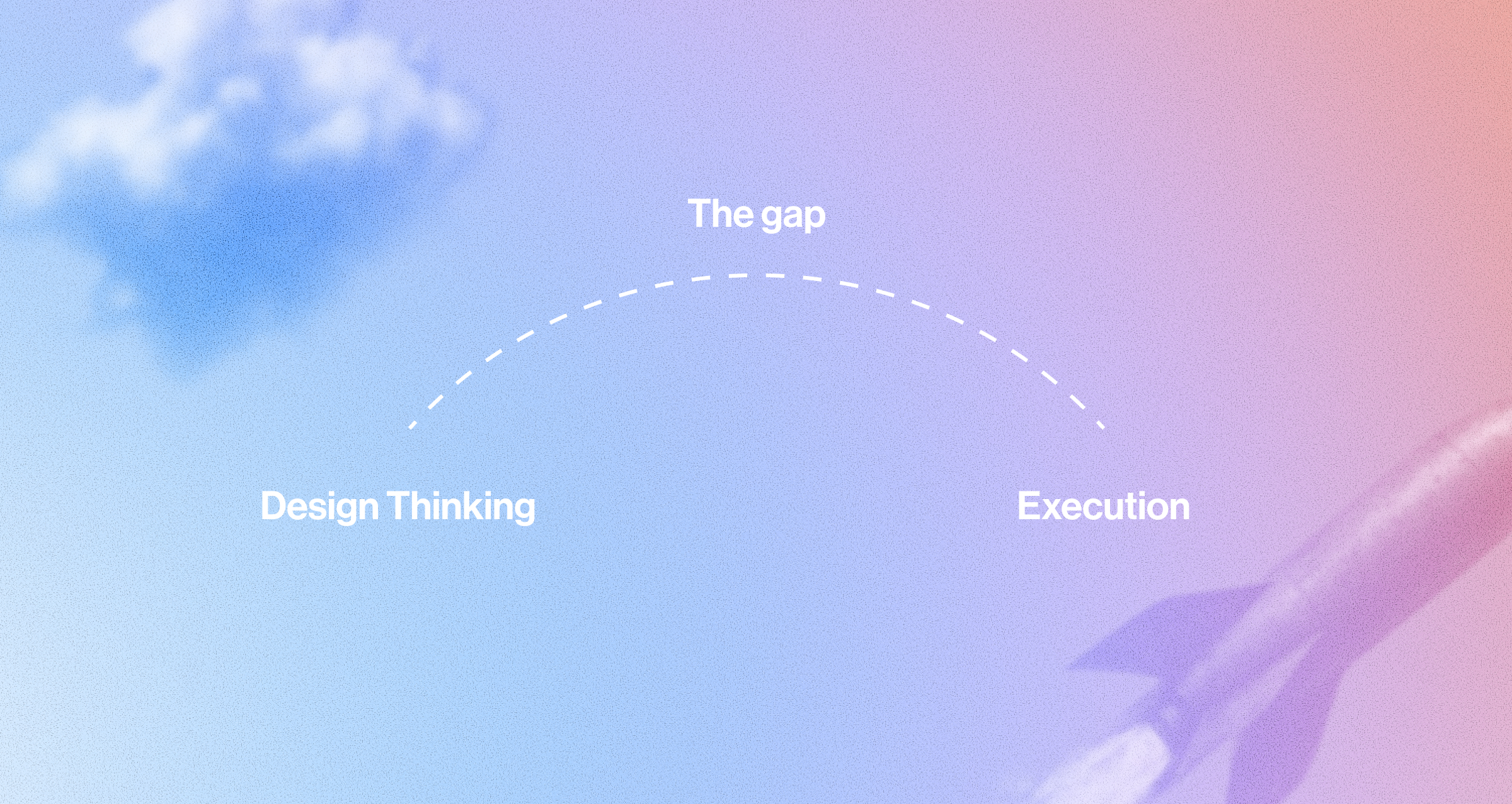
We’re still anchored in the human-centered ethos of design thinking, but we understand we need to bridge the gap between ideal future state and first-version product release, as well as accounting for the organizational hurdles, misalignments, and barriers that prevent human-centered design from succeeding.
While a beginner’s mind can be valuable in some contexts, enterprise-level UX design demands high-impact qualitative research, carried out by experienced practitioners. It requires skill, training, expertise, and critical thinking working in concert with empathy, creativity, and a human-centered lens. High-level research, evidence derived from data, and subject matter knowledge are not optional.
Mature UX design now encompasses a broad range of modalities:
- Multimodal experience strategy & service design: Effective UX design goes beyond one-off solutions to fully develop end-to-end journeys. We align processes, technologies, and interactions within complex systems to generate long-term value for both the user and the provider.
- Design integration. Enterprise-level design systems have fully integrated the design-to development process, embedding design in product lifecycles rather than siloed workshops.
- AI-driven design. Publishing a mature design system to engineering environments means that coded, high-fidelity prototypes with real data can be built in much less time, accelerating iteration and time to market.
Design thinking’s demise has been greatly exaggerated. It’s not dead—it simply isn’t enough to stand on its own as a system for building robust, scalable products that clients can release with confidence. It can be useful as an exercise or a reframe, but it’s not UX, and it’s not a replacement for human-centered design.
Outcome matters more than output. The best UX for users only exists if it ships.
Laura Blanchard is Vice President of Design & Strategy at Blink. She defines and leads product and experience strategy for complex product ecosystems and runs Blink's Content Modeling for AI and Enterprise Design Systems practices. She specializes in building alignment across siloed teams. Her clients include Qualcomm, Microsoft, United Airlines, Providence Health and Services and Amazon.