



In 2025, our commitment to diversity, equity, and inclusion is intrinsic to Blink’s mission of improving people’s lives. Even as the broader landscape shifts, we continue this work because it makes our design more effective and our culture more humane. DEI is not an initiative for us: it’s a practice that strengthens the teams we build, the products we design, and the breakthroughs we deliver for our clients.
This year, we focused on deepening our listening, sharpening our measurement, and refining the systems that sustain equity. We continued to embed DEI across the organization as a foundation for everyday decision‑making and design. We also invested in the learning and practices that keep our people informed, our processes fair, and our work inclusive of the communities we serve, as well as the wider world.
Developing meaningful metrics for DEI accountability
To ensure that our work in this area transcends surface-level gestures, we continue to focus on making our DEI lens consistent, persistent, and meaningful. Last year, we moved intentionally from a volunteer‑based DEI committee to a more integrated approach that frames DEI as a company‑wide capability. Through a series of workshops across departments and levels, we aligned on six beliefs that guide our work and our ideas for how to track impact:
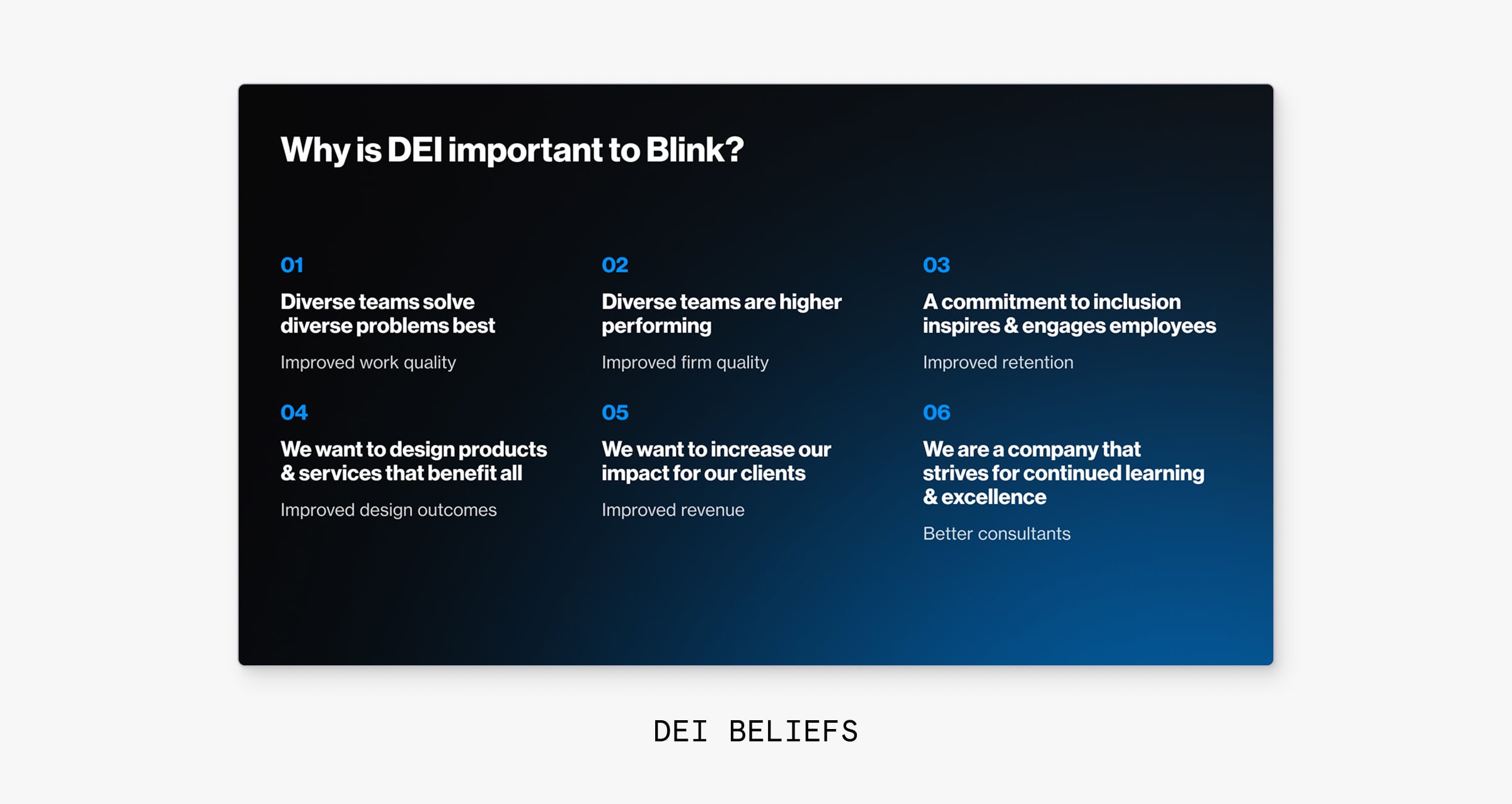
To build the framework for tracking progress related to our pillars, we had to answer a series of questions:
- Which metrics would be the best to indicate progress, success, or areas that need improvement?
- What tools would supply these numbers?
- Which systems, if any, needed updates to give us the metrics we want to track year over year?
After a three-month exploration, we built the framework to track a streamlined set of DEI metrics so we can understand representation, equity, and impact across the organization. These measures:
- Include workforce composition across teams, leadership, and recruiting stages
- Feature culture and equity indicators such as inclusivity scores, pay equity, and promotion equity
- Reflect how consistently inclusive design practices show up in our project work, including use of racial equity guidelines, accessibility considerations, and participant representation
We also monitor our external and internal impact through pro bono investment, DEI‑related client opportunities, learning events, and training completion. Together, these metrics create a holistic view of how we’re meeting our goals and expectations.
Listening more deeply: appreciative inquiry
Our annual culture survey remains a helpful directional tool—but this year, we recognized potential blind spots, especially around the lived experiences of underrepresented groups. To honor those experiences with greater nuance, we conducted a qualitative study rooted in Appreciative Inquiry.
This approach invited employees to share specific stories of high points and low points across four core areas: career growth and development; belonging and connection; support for unique identities and personal circumstances; and stress, boundary, and energy management.
This qualitative approach allowed us to hear directly how employees experience our culture—not just in aggregate scores, but in the real moments that shape their day‑to‑day work and well‑being. The insights from these conversations will inform a collaborative workshop where we will co‑create a shared future vision for Blink, ensuring that what we build next reflects what matters most to our people.
Learning as a team: everyday DEI fluency
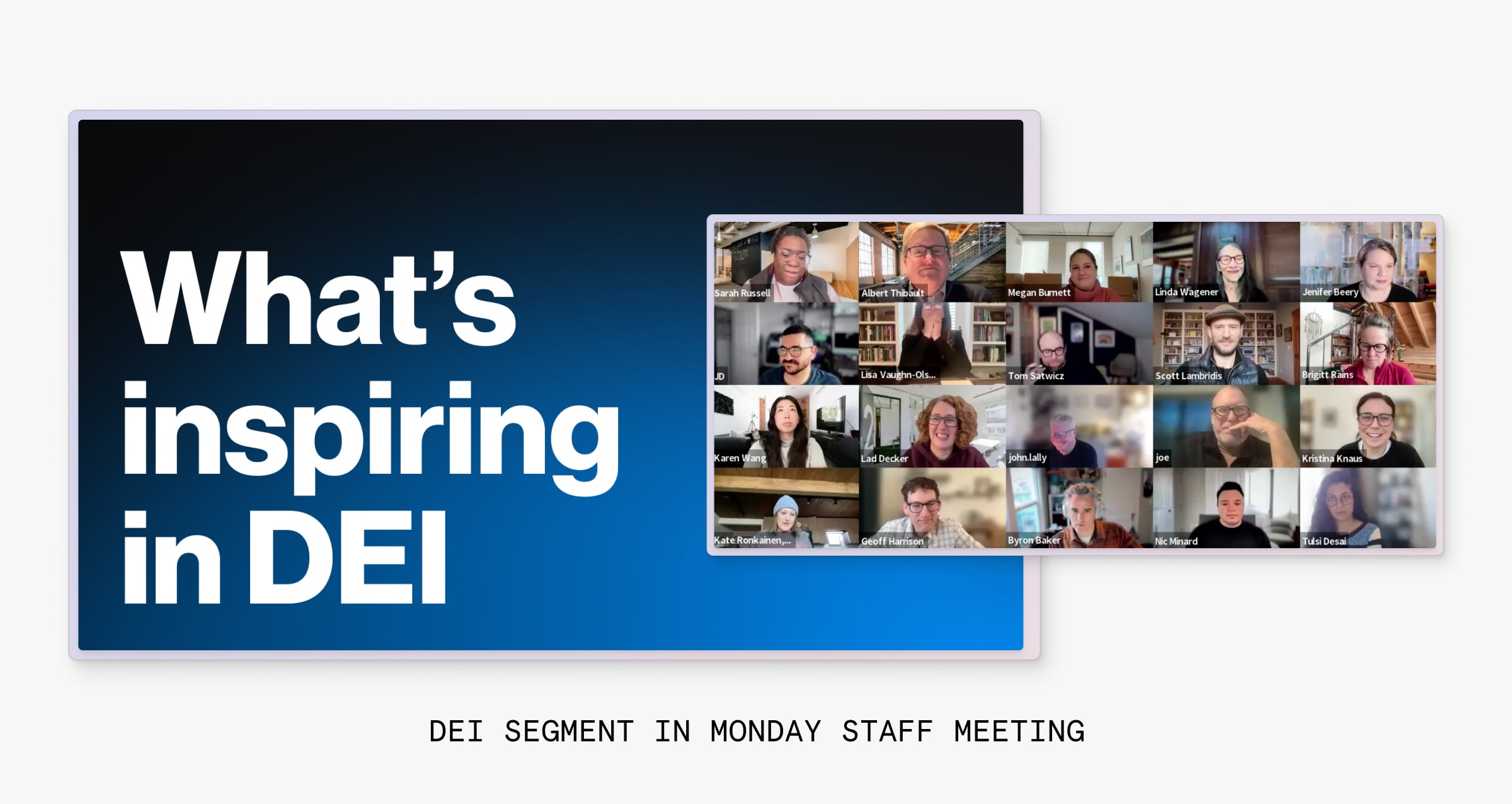
We continued to grow our collective fluency through the “What’s Inspiring in DEI” segment at weekly staff meetings, spotlighting topics that translate directly to our work, including:
- An overview of running accessibility audits for our clients
- A case study diving into the way we conducted in person research for Blind and Visually Impaired participants
- A shareout of the amazing Microsoft Inclusion Lab Tour we were able to attend
- A deep dive into Inclusive AI and how to incorporate this into our project work
These sessions keep inclusive practices and inspiring content front‑and‑center. We also maintained bias‑mitigation training ahead of our year in reviews and hosted training sessions to better support our employees with cross-cultural collaboration as our global footprint expands.
Beyond Blink: our pro bono work for Girl Security
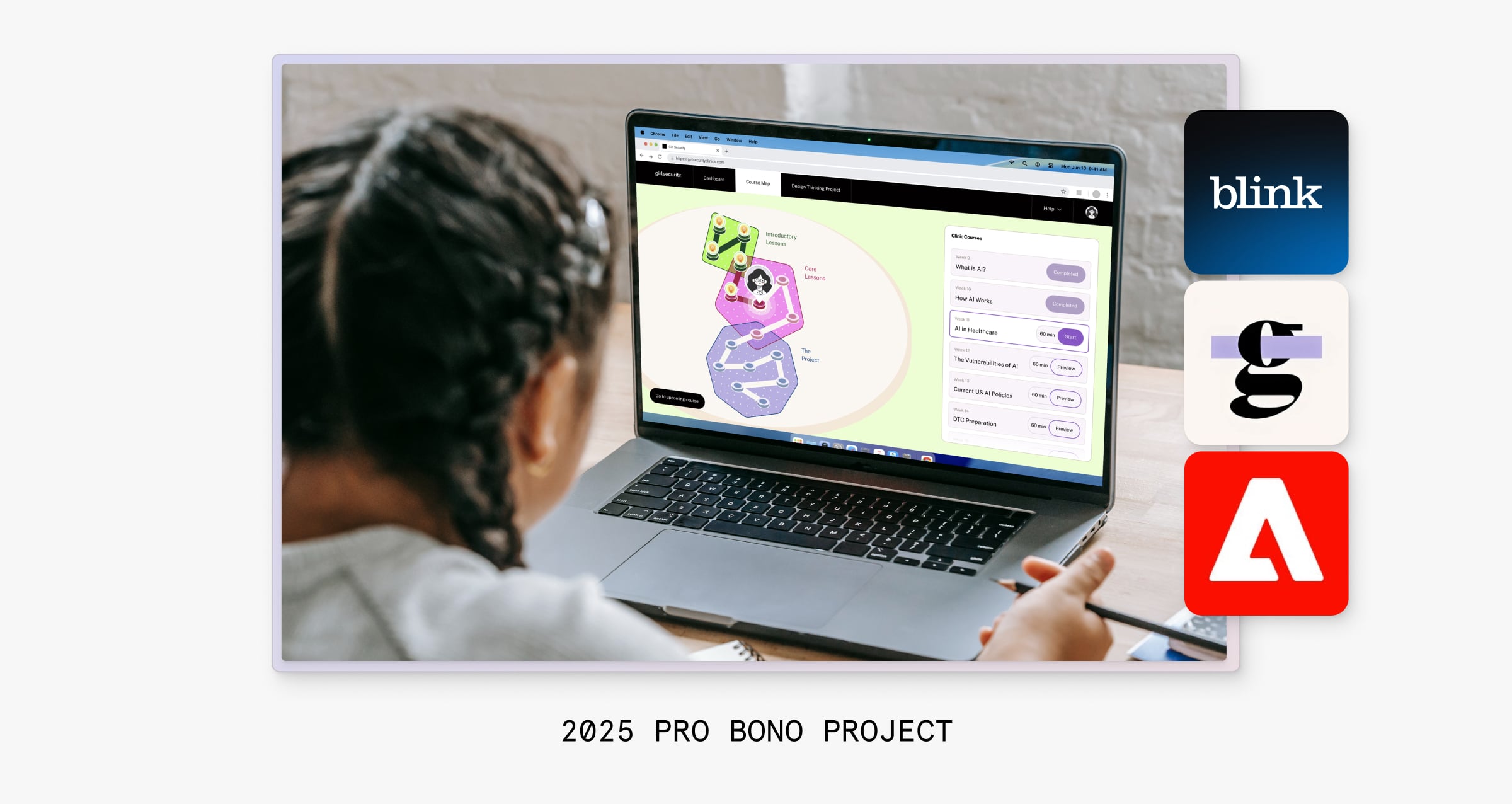
As part of our 2025 pro bono program, we partnered with Girl Security, an organization that has supported marginalized high school communities since 2019 by helping students apply their lived experiences to complex national security challenges.
Girl Security's interactive clinics expose students to issues like election security, disinformation, climate risk, and digital health, while also highlighting career paths in state and local security fields. Guided by Girl Security’s mission and some help from our friends at Adobe Product Equity, Blink worked to extend their existing design‑thinking challenge by creating a modular experience that teachers can use across both in‑person and virtual settings.
The result is a reusable design prompt system that can evolve with new topics, helping Girl Security continue to equip young people with the skills, confidence, and sense of belonging needed to lead in the security challenges of tomorrow.
The year ahead: our priorities for 2026
Building diverse, equitable, and inclusive systems means consistently investigating how we can better our outcomes, our impact, and our culture. Below are some of our goals for the coming year.
- Turning insight into action: Integrating themes from the Appreciative Inquiry study into Blink culture initiatives, embedding improvements into employee experiences for a more positive future
- Putting metrics to work: Using our DEI framework to set goals and guide investment in process improvements
- Strengthening equitable systems: Continuing to get feedback and conduct annual audits to refine operations around raise/promotion protocols, recruitment practices, and manager enablement
- Scaling inclusive design: Expanding accessibility audits, inclusive research and design methods, and the responsible use of AI across projects
- Growing leadership at every level: Building capability so DEI is practiced and championed in each team, not centralized or siloed
DEI at Blink continues because our people choose to practice it. Progress is not a straight line, but our commitment remains steadfast: to make technology and design more equitable, accessible, and effective for all the communities we serve.
Thank you to everyone who contributed time, care, and expertise to this work in 2025. Here’s to another year of building systems that are fair, products that include, and teams that thrive.
Kristina Knaus is Vice President of Culture at Blink. In her role, she works to champion a workplace that supports authenticity, belonging, and human‑centered growth through strategic cultural initiatives. She’s a certified SHRM HR professional who finds joy in creating an equitable and inclusive environment where employees can learn, grow, and thrive.